Nothing Unchanged But The Clouds
Nothing Unchanged But The Clouds
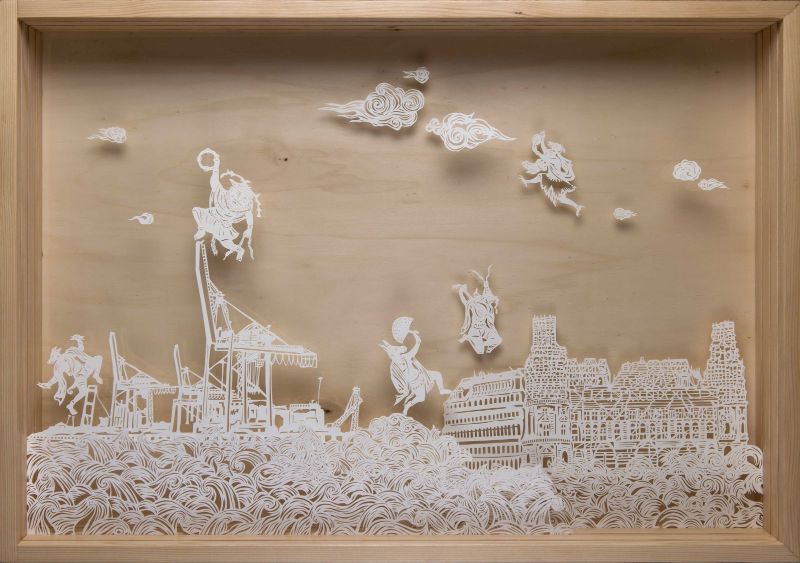
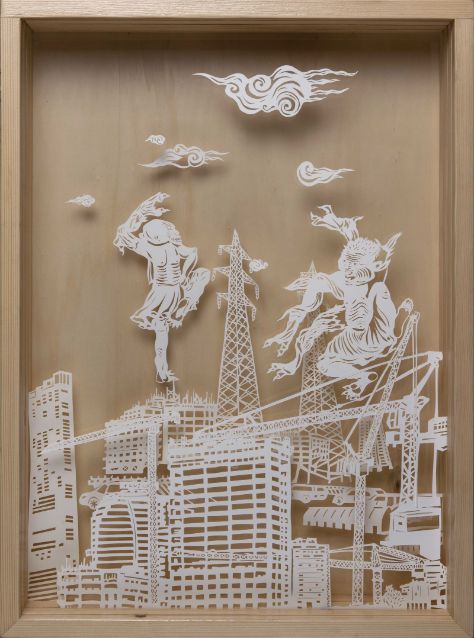
“A generation that had gone to school on a horse-drawn streetcar now stood under the open sky in a countryside in which nothing remained unchanged but the clouds, and beneath these clouds, in a field of force of destructive torrents and explosions, was the tiny, fragile human body.”
(Walter Benjamin, The Storyteller, 1936)
Written by Walter Benjamin between two world wars, this sentence summed up the stance of the person against man-made disasters. Set out with this quote, Güneş Çınar grounds on the position of the humankind in today’s world and tells a dystopic story regarding the future of the world. The word “fable” probably suits this exhibition’s narrative better than the word story, forasmuch as the animal figures combined with the urban fragments and textures are the only protagonists of the vision of a humanless future.
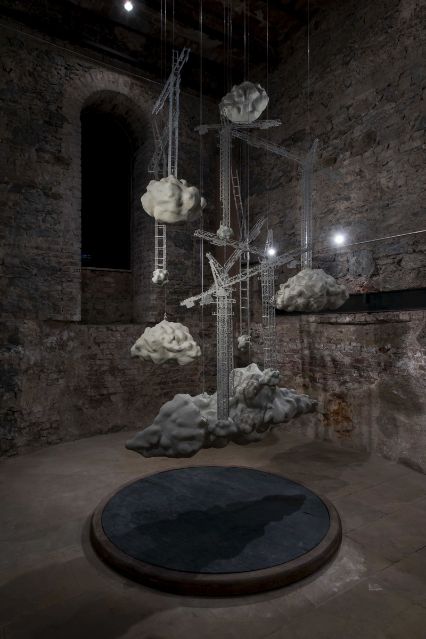
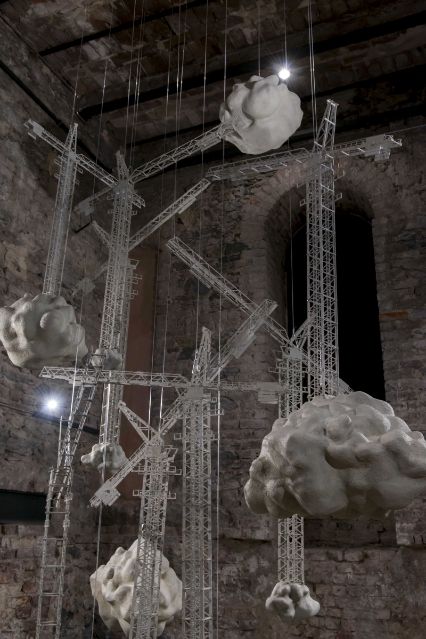
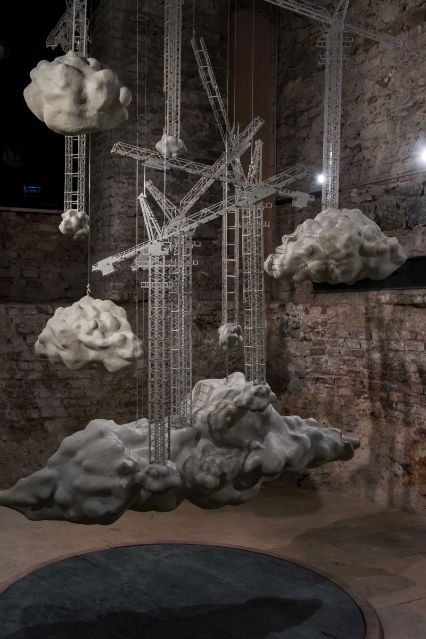
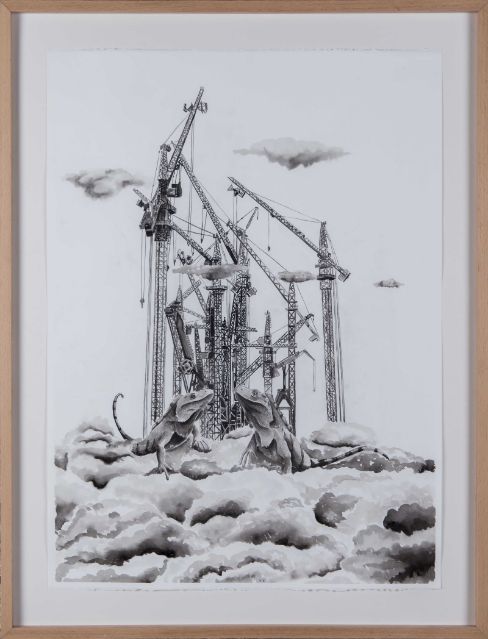
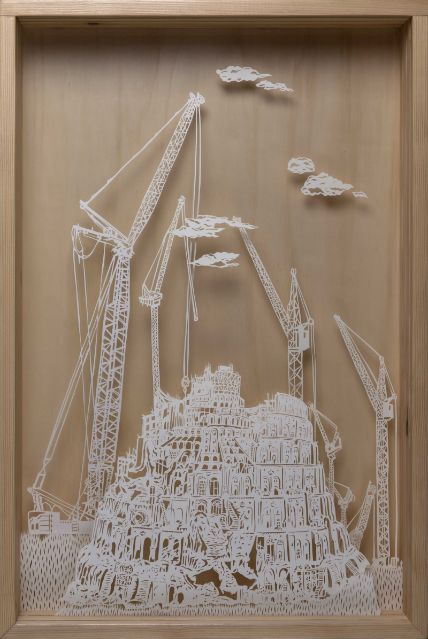
Conjuring up the rabbit hole that took Alice to the Wonderland, the archaic well in the middle of the basement of Adahan that used to be used as a cellar can be said to take us to a semi-fantastic, semi-familiar land. Hung right above the well, the installation entitled “Nothing Unchanged but the Clouds” is at the heart of not only the venue, but also the artist’s post-apocalyptic fiction. Consisting merely of clouds and cranes, the first thing that this work inarguably brings to mind is the issues of construction frenzy and urban transformation occupying our agenda for many years. Went beyond the limit of vision and competing with the clouds, these cranes present a familiar scenery from İstanbul. Woven with building structures leading us to lose our points of reference, nightmare of a labyrinth-city where we get lost. Rumor has it that Adahan building was built in the 19th century with the stones from the destroyed Galata city walls. Blinking at the history of the building, the installation is as if whispering us that urban transformation will never come to an end.
This installation where cranes compete with clouds basically spreads a common feeling that leaked in all through the exhibition, the tension between mortality and earthly wealth: The question “Ubi sunt qui ante nos fuerunt?” meaning “Where are those who were before us?”, which is inscribed in the gravestones of or texts written on the emperors in the Ancient Rome, is actually a warning that highlights the course of time, temporariness of life and mortality, rather than being an expression of nostalgia, and reminds that possessions have an end. What remains in our hands, when the glory of the world passes away? Probably cranes and skyscrapers as the monuments of a lost era of victory… The moral of this fable-exhibition, if any, can be said to be passed through the imagery of how the world would look in the post-anthropocene, after the disappearance of the humankind.
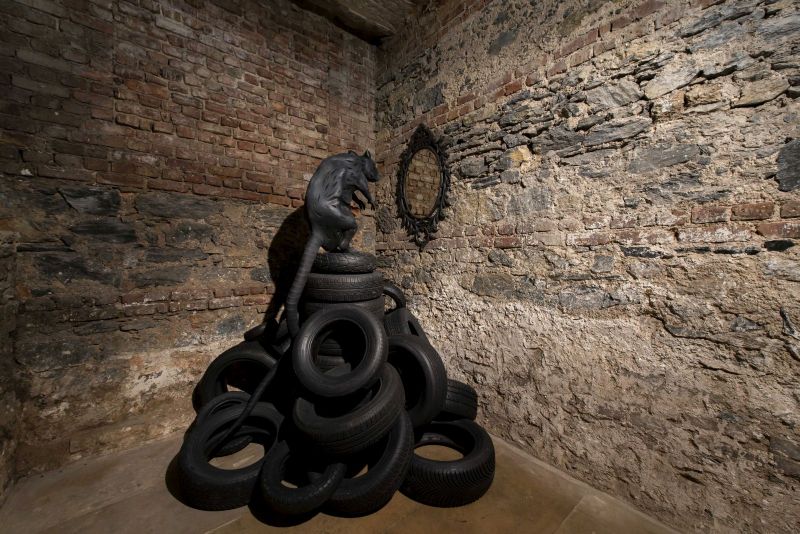
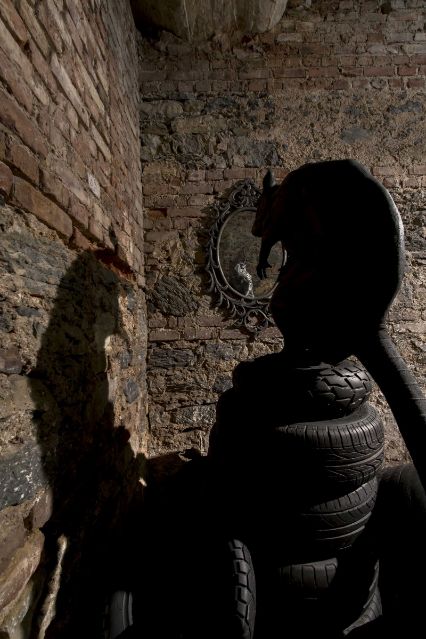
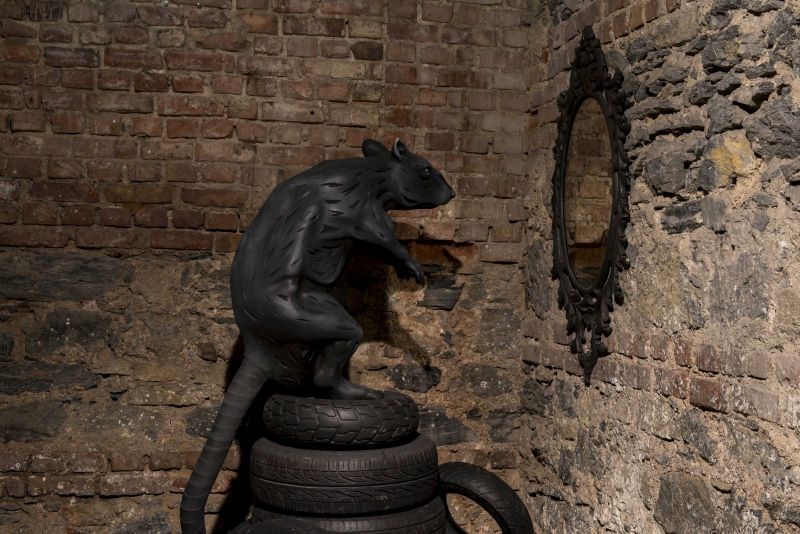
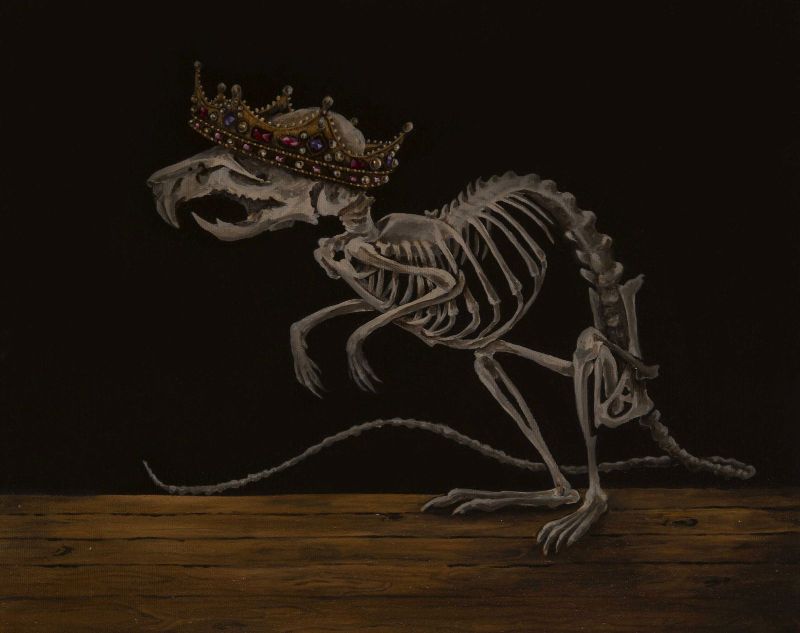
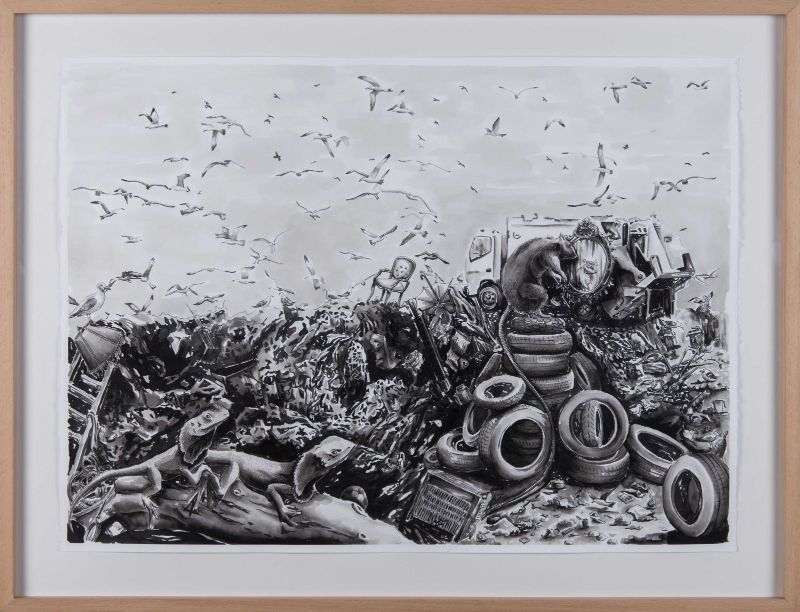
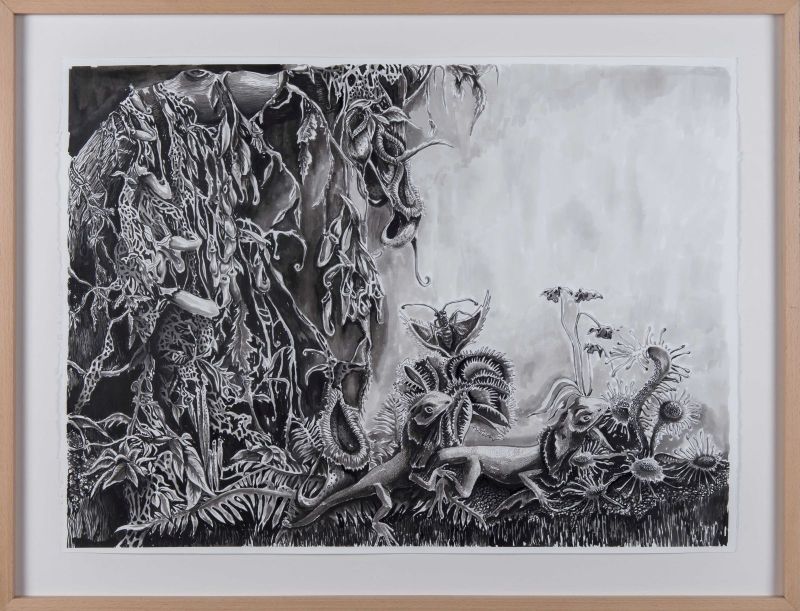
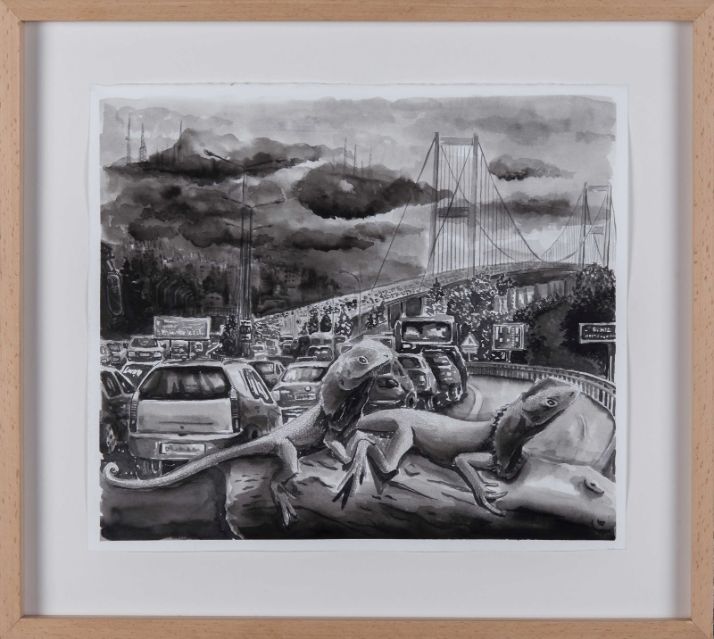
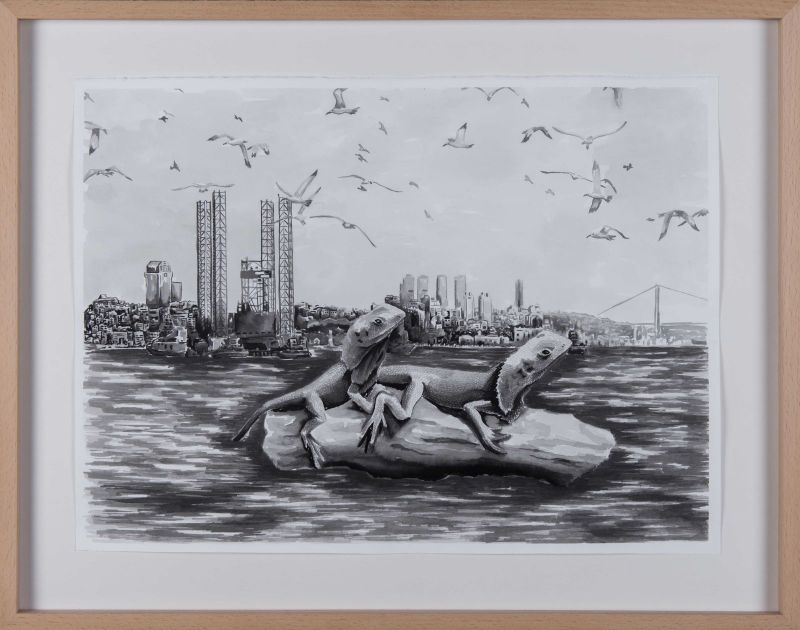
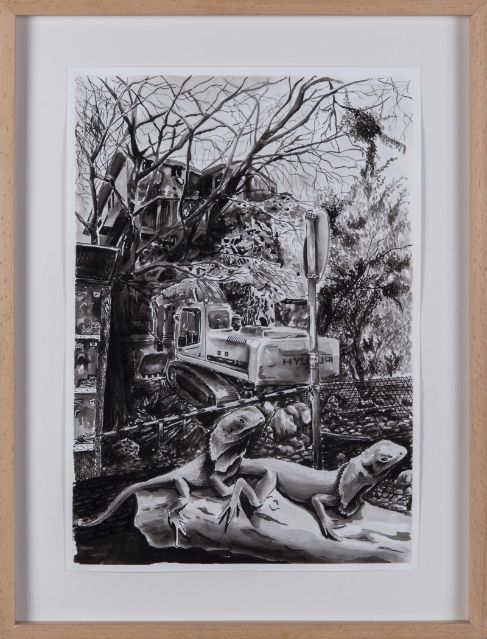
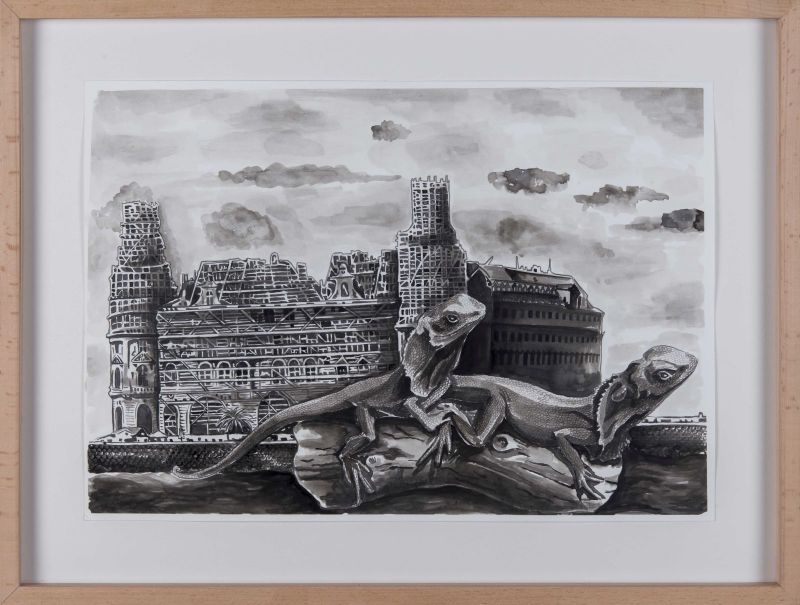
Güneş Çınar shows the sceneries from that post-anthropocene world through two lizards that are the protogonists of the series entitled “Runaway” created with Indian ink on paper: Familiar spaces such as Haydarpaşa Terminal or Taksim Square in these scenes covering one of the rooms of the exhibition venue show not only the scenes to be confronted in any metropolitan city, but also the décor of an abandoned world decorated with piles of garbage, the image of a new jungle-city where the nature seized everything, an ugly world where the only thing remained from technology is ruins and no other sign of life than reptiles such as rats and lizards or wild urban animals such as seagulls is left. One of the scenes that “Runaways” witness comes into existence in three dimensions in another room; in the installation entitled “Mirror Mirror”. Standing on its two feet like a human being on the pile of waste tires and gazing at itself in the mirror, the giant rat is now an important part of the food chain of the periphery that is the new ecosystem where everything not desired to be seen in glossy cities are flung; is even the new hero and king thereof.
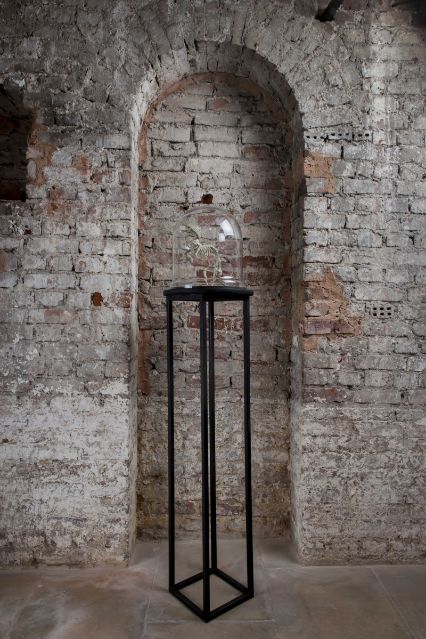
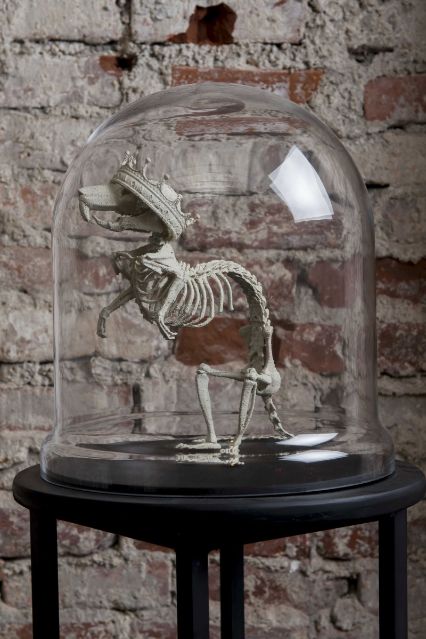
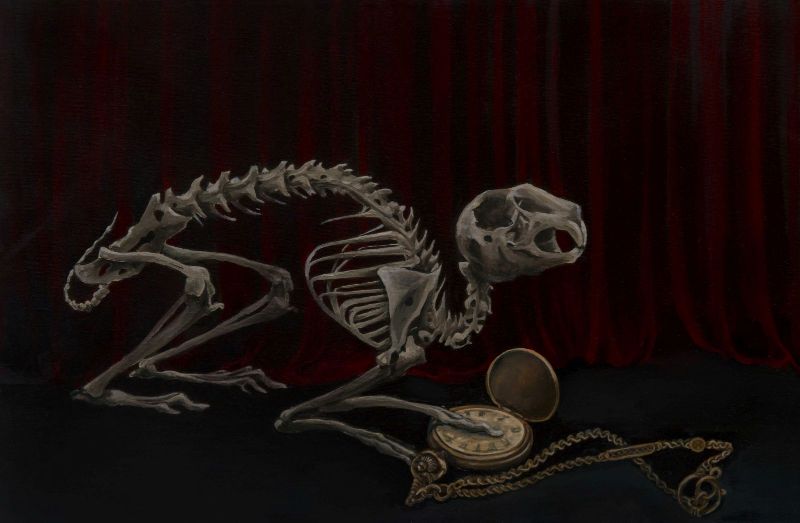
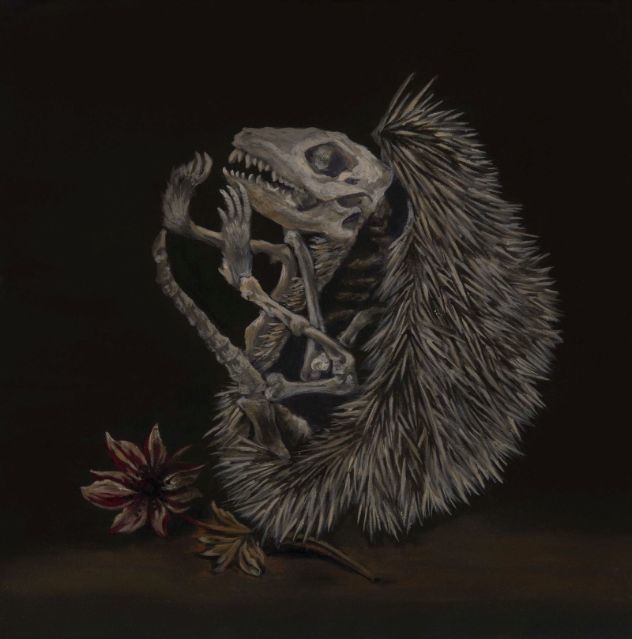
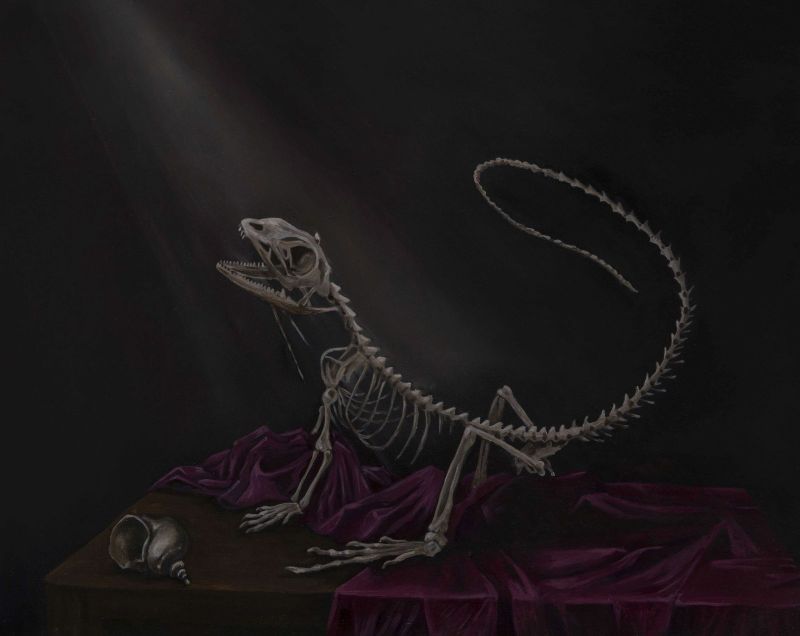
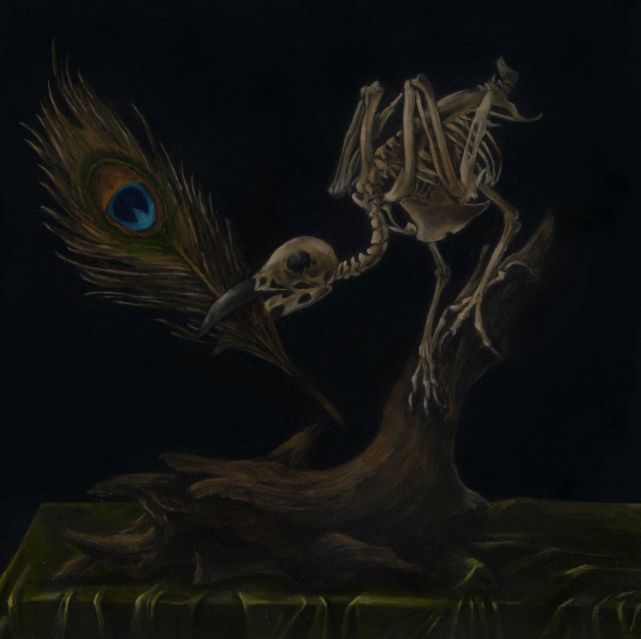
The 11-piece series directly named after the paintings of dead nature called Vanitas makes reference to the painting style depicting the inevitability of death and ephemerality of earthly things that emerged in the Netherlands in the 16th century. While skulls, the indispensible image of the works from that period, the symbol of death and mortality are replaced by animal skeletons, accompanying those skulls, the symbols of wealth such as a crown ornamented with precious stones, red velvet curtain and pocket watch as well as the images addressing the beautiful, yet short life such as flowers and seashells become the parts of still-life paintings from that world.
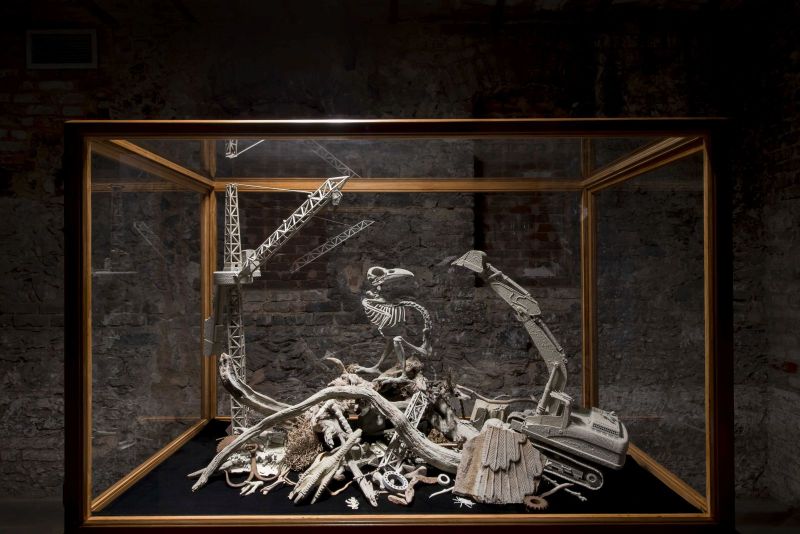
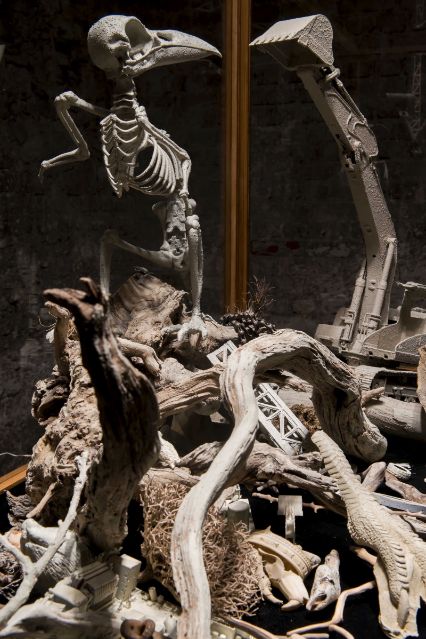
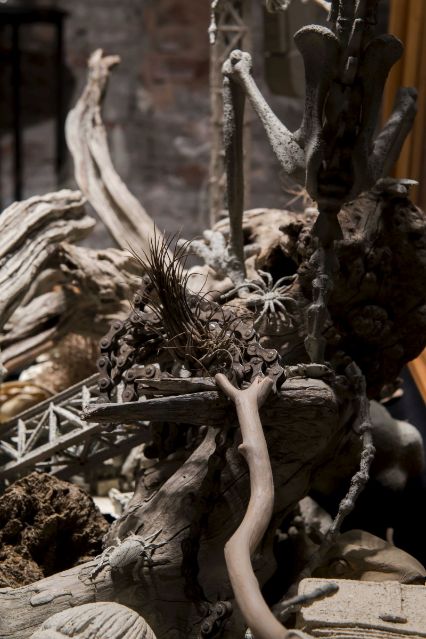
Another imagery regarding how the imaginary world in the exhibition can be represented in a fictitious future is in the room hosting the table installation entitled “When All Colors Fade Away”. Giving one of the possible answers to the question what will remain from the humankind in a world where environment is transformed and climate changed due to human activities, this installation is like a frozen scene from a dystopic landscape: On an old style display table, an animal skeleton over a broken wood log is displayed along with construction machines such as a crane and digger. The other things left to us after the death of the nature (ecocide) are nothing more than “soot, rust, dirt, coal, plastic, garbage, rubber”*… This work that makes reference to the cabinets of curiosity that are considered as a microcosm or a memory theater and pioneer of the concept of museum in the words of Francesco Fiorani gives tiny clues of the current natural history, geology and archeology.
While the exhibition that is positioned in an indefinite time period serves as a kind of time machine and beams the viewer up to a bad future projection, it brings to mind the highly realistic landscapes from İstanbul, where the artist was born and grew up: Hedgehogs that step up from underground due to vibrations created by constructions and feed themselves with cat food on streets, armies of rats rushing out from hollows dug, wild boars trying to swim through Bosphorus are not fictional elements, but the scenes we saw on the news. After all, what is told in this exhibition is our tale** and to a degree, it is up to us how the tale will end…
* From Rap singer Ezhel’s song entitled “Şehrimin Tadı” (Taste of My City).
** With reference to the well known quote from Horace, the Roman poet “De te fabula narratur” (The tale is told of you).
"Nilüfer Şaşmazer From the exhibition catalogue, 2018 " eklenecek.